Meet the Monochrome Monday Chefs:
Dan, Head Chef at Harvey Browns
A broken dishwasher might seem an unlikely starting point for a career in food. For Dan, Head Chef at Harvey Browns on the Isle of Wight, it was the reason he first stepped into a professional kitchen at just 13 years old.
What followed took him from preparing breakfast at The Little Gloster to experiencing the kitchen at L’Enclume, training at Chewton Glen and eventually leading the team at Harvey Browns. Along the way, he developed a love of classical French cooking, an appreciation for Island produce and clear ideas about the kind of kitchen he wants to run.
As Dan returns for Monochrome Monday 2027 in support of The Burnt Chef Project, we caught up with him about his career, the importance of family and why excellent food and a supportive working environment should go hand in hand.
A Better Way To Plan Your Event
At Harvey Browns, Dan’s cooking starts with a close connection to the ingredients. Being part of a working farm gives him access to produce grown nearby, while his classical training informs how he uses it.
Tell us a little about yourself and what you do now. Where are you cooking, and what kind of food do you love creating?
I’m Dan, Head Chef at Harvey Browns on the Isle of Wight. I joined when we first opened in 2022 as a chef de partie and have worked my way up through sous chef to Head Chef. I’m actually the only remaining member of the original kitchen team.
I’ve always loved classical French cooking, particularly the techniques and attention to detail. At Harvey Browns we’re fortunate to be part of a working farm, so I have access to some fantastic produce grown right on our doorstep. I enjoy taking good, fresh ingredients and getting the most out of them.
Everything In One Place
Dan’s introduction to hospitality came early. What began as an opportunity to help out at the Royal London Yacht Club soon became something much more lasting.
How did you get into cooking? Was there a person, place or experience that first sparked your interest?
I started working in kitchens when I was 13, almost by accident. The Royal London Yacht Club needed someone because their dishwasher had broken, and I was taken on there and then.
I hadn’t actually told them how old I was. By the end of the evening, when they found out I was only 13, they were pretty shocked! Luckily, they’d been happy enough with my work that they kept me on.
I loved being in the kitchen from the beginning. By 15, I was working at The Little Gloster, preparing breakfast service on my own, including hand-whisking hollandaise sauce. I was hooked.
Which moments have shaped you most as a chef? That might be a particular kitchen, mentor, achievement or difficult period.
I’ve had some incredible opportunities at a young age, but I’ve also had to take on responsibility quite quickly.
At The Little Gloster, several chefs left unexpectedly and I found myself being promoted to commis chef on the spot. That was a steep learning curve!
At 16, I completed a stage at Simon Rogan’s L’Enclume, which was an amazing opportunity to experience cooking at that level.
When The Little Gloster closed, I moved away from home at 17 to work at Chewton Glen while attending Brockenhurst College one day a week to complete my formal training in classical French cooking.
Joining Harvey Browns when it opened and progressing to Head Chef has probably been my biggest achievement so far. I’ve grown up with the kitchen and the business.
Returning for Monochrome Monday 2027
Monochrome Monday brings people from across the Island’s hospitality community together around a shared purpose. For Dan, the chance to cook alongside fellow Island chefs is part of the appeal, but the reason behind the event matters just as much.
Why did you want to be involved in Monochrome Monday? What made you say yes?
Hospitality is a brilliant industry to work in, but it can be incredibly demanding. I think there’s still a culture where people feel they have to put up with things that aren’t necessarily healthy, simply because that’s how kitchens have always operated.
The Burnt Chef Project is doing something important by challenging that culture and making support available to people in hospitality.
It’s also a great opportunity to work alongside other Island chefs, produce something special and support a worthwhile cause. When I was asked back for a second year, it was an easy decision.
Was there a moment from last year’s Monochrome Monday that has stayed with you?
I really enjoyed creating the dessert last year. My continent was Africa, and I made an African doughnut with plantain custard. It went down incredibly well, which was obviously really satisfying.
But the bigger thing was seeing so many people from different parts of the Island’s hospitality industry coming together. We spend so much of our time working in our own kitchens that we don’t often get opportunities like that.
The fact that the event raised over £12,000 was fantastic.
A recurring theme in Dan’s answers is the distinction between maintaining high standards and putting people under unnecessary strain. He values the structure and discipline of a traditional kitchen, while questioning behaviours that have too often been accepted alongside them.
What does The Burnt Chef Project’s work mean to you?
I think it’s helping to change some attitudes that have been around in professional kitchens for a very long time.
There’s sometimes an assumption that to be successful in hospitality you need to be tough, work excessive hours and accept a certain amount of aggression or bad temper as part of the job.
I don’t think those things necessarily make someone a better chef, or a better leader.
You can have discipline, high standards and a well-organised kitchen without creating an environment where people are afraid to make mistakes or speak up.
The Burnt Chef Project is helping people recognise that looking after their mental health is just as important as developing their professional skills.
What do you love about working in hospitality, and what do you find hardest?
I love the creativity, the pace and the satisfaction of a good service. There’s something really rewarding about working with a team where everyone knows their role and everything comes together.
I’ve always admired the traditional French brigade system. It’s probably why Ratatouille is my favourite animated film! I love the way it captures the passion for cooking, the kitchen hierarchy and the idea that good food is something worth taking seriously.
The hardest part is probably finding the balance between work and everything outside it. Hospitality doesn’t operate around normal working hours, and it’s easy for your job to take over your life if you’re not careful.
If you feel comfortable sharing, has there been a time when your work or life affected your mental health? What would you like people to understand about that experience?
I’ve always considered myself quite resilient, and I’m fortunate to have a close family around me. But working in different kitchens has made me realise that some of the things traditionally associated with being a successful chef aren’t necessarily good for people’s mental health.
I’ve seen different styles of leadership, some good and some not so good. Anger, shouting and controlling behaviour can sometimes be mistaken for strength or authority.
I don’t think that’s right. Being able to cope with pressure yourself doesn’t mean everyone around you should have to cope with it in the same way.
I think it’s important to recognise that people are different, and that creating a good working environment is part of being a good chef.
What would you like to see change in hospitality to better support the people working in it?
I’d like to challenge the idea that being a demanding chef means being an aggressive one, because the two are not the same thing.
I believe in the traditional kitchen brigade, clear responsibilities, discipline and high standards. But none of those things require shouting at people or making their working lives miserable.
I’d also like more recognition that people have lives outside work. Long hours will sometimes be unavoidable in hospitality, but that shouldn’t mean people can never have a reasonable work-life balance.
Ultimately, I think a kitchen where people feel valued and respected is going to produce better food anyway.
For someone who started working in kitchens so young, cooking has shaped a large part of Dan’s life. Being a father has also sharpened his sense of what he wants to protect outside work: time with his children and the everyday moments that are easy to miss in hospitality.
What helps you look after your mental health now? This could be support from others, professional help, boundaries or everyday habits.
Family, without a doubt.
I’m very close to my family, and being a dad to two young boys has made me appreciate how important time away from work is.
I’m fortunate that Harvey Browns is a family business and that we can organise my shifts to allow me to spend proper time with my children, including being able to do things like the school run.
Having that balance makes a huge difference. I love my job, but I don’t want to miss my boys growing up because I’m always in the kitchen.
What would you like to see change in hospitality to better support the people working in it?
I’d like to challenge the idea that being a demanding chef means being an aggressive one, because the two are not the same thing.
I believe in the traditional kitchen brigade, clear responsibilities, discipline and high standards. But none of those things require shouting at people or making their working lives miserable.
I’d also like more recognition that people have lives outside work. Long hours will sometimes be unavoidable in hospitality, but that shouldn’t mean people can never have a reasonable work-life balance.
Ultimately, I think a kitchen where people feel valued and respected is going to produce better food anyway.
That approach carries through into the everyday running of Dan’s kitchen. Making time for a laugh after service or checking in with someone after a difficult day can help build the trust that makes bigger conversations possible.
What would you say to someone in hospitality who is finding things difficult right now?
Talk to someone.
I think one of the problems with hospitality is that we’re often so used to getting on with things, regardless of how difficult they are, that asking for help can feel unnatural.
But being a good chef doesn’t mean you have to deal with everything on your own.
Whether it’s someone at work, a family member or an organisation like The Burnt Chef Project, there are people who will listen and help.
What do you do to make your kitchen a place where people feel comfortable speaking up?
I think it’s important to have a good atmosphere in the kitchen. We work hard and service can be intense, but that doesn’t mean everything has to be serious all the time.
After service, when we’re cleaning down, I like to turn the music up. I’ll often choose particular songs just to get a laugh out of everyone. It’s a good way to unwind together after a busy service.
I also try to look out for people. If I think someone’s had a difficult day or something is bothering them, I’ll often give them a call or send them a message after service to check they’re alright. Sometimes I’ll go and see them.
I think people are more comfortable speaking up when they know you genuinely care about them as people, rather than just what they do in the kitchen.
A taste of Europe, grown on the Isle of Wight
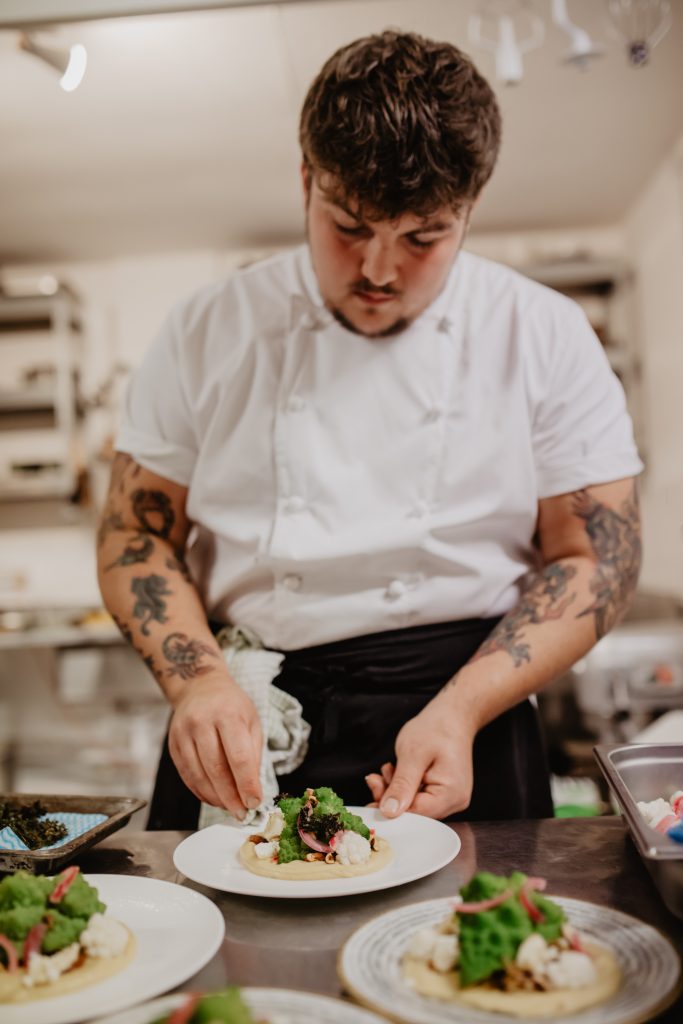
After creating an African-inspired dessert last year, Dan is taking his course in a different direction for 2027. His European inspiration brings together classical French techniques, vegetables from the Harvey Browns farm and a determination to make thoughtful use of each ingredient.
The connection between kitchen and farm is also a personal one, with his own brother sometimes harvesting the vegetables he cooks.
Tell us about your course for Monochrome Monday. What inspired it, and how does it reflect your style of cooking?
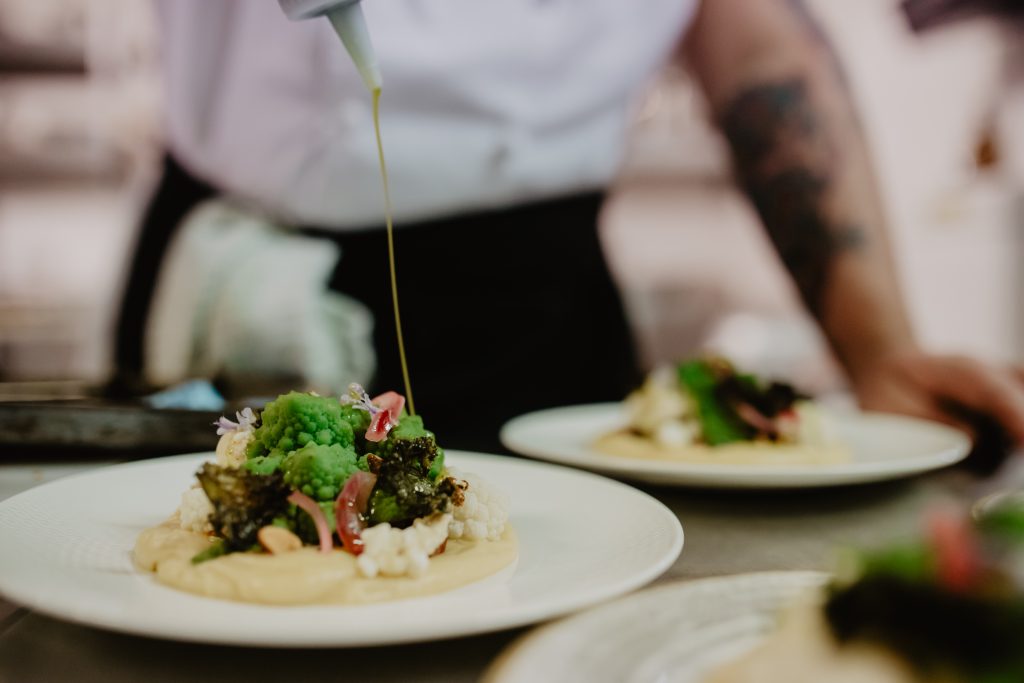
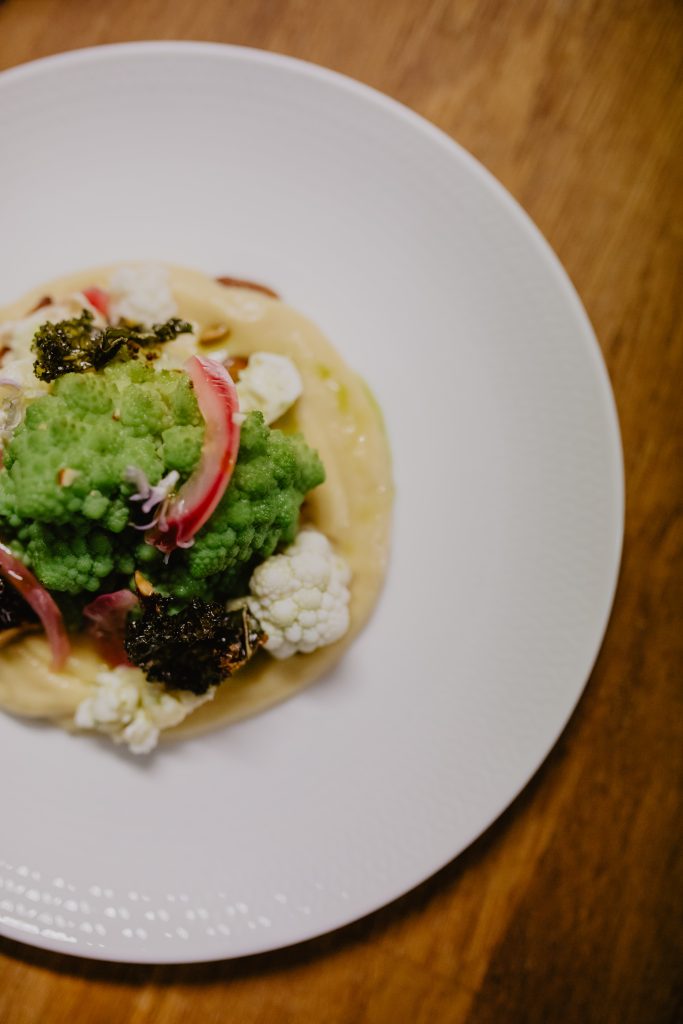
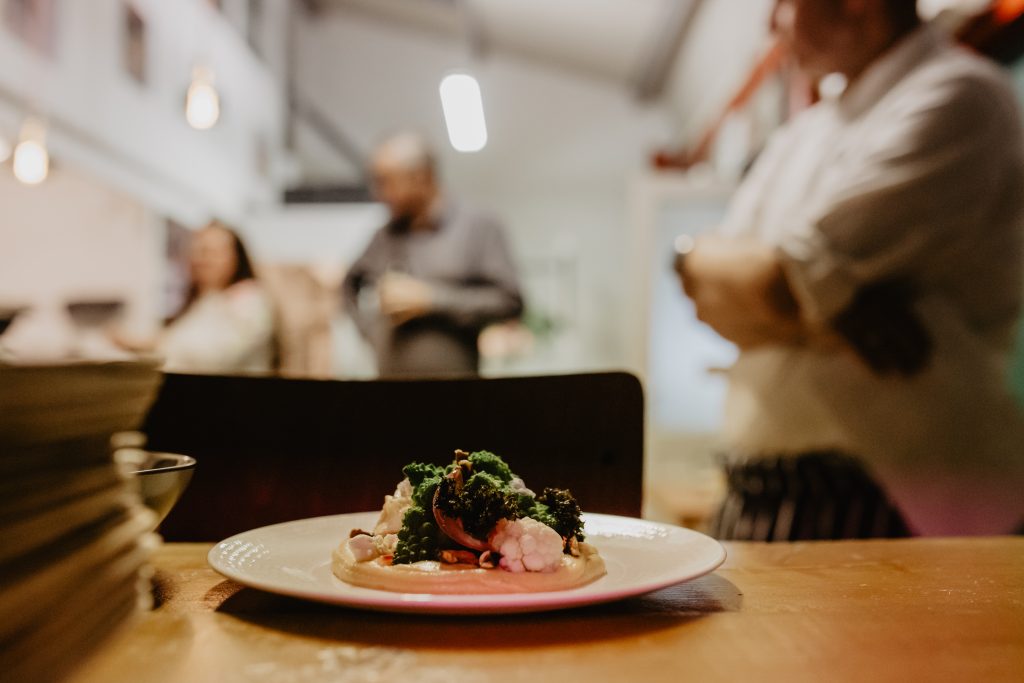
This year my course is inspired by Europe, so it was natural to draw on my love of classical French cooking. It’s a vegetable dish, and all the vegetables will come directly from our farm at Harvey Browns. There’s also a little goat’s cheese from the Harvey Browns deli.
One thing I feel strongly about is food waste, particularly in fine dining, where perfectly good parts of vegetables can sometimes be discarded simply because they don’t look right on the plate. I enjoy finding ways to use as much of each ingredient as possible without compromising the finished dish.
Working so closely with the farm makes that especially important to me. Sometimes the vegetables coming into my kitchen have been picked by my own brother, so there’s a real family connection to the food.
For me, the course reflects what I love about cooking: classical French techniques, excellent produce, creativity and making the most of what we’ve grown.
What do you hope guests take away from the evening, beyond enjoying the food?
Hopefully a better understanding of the people and work that go into creating the food they enjoy.
I’d love people to appreciate the quality of produce we have here on the Isle of Wight, and the opportunities we have to use it thoughtfully.
But more importantly, I hope the evening encourages people to talk about mental health in hospitality and recognise the value of the work The Burnt Chef Project is doing.
If everyone leaves having enjoyed themselves, learned something and contributed to a good cause, that’s a pretty successful evening.
For all the technique, ambition and creativity involved in his working life, Dan’s favourite meal after service comes back to something simple: being at home, around a table, with his family.
After a long service, what’s your go-to comfort food?
Anything my mum’s cooked, so I don’t have to!
In all seriousness, probably Mum’s fajitas. But it’s less about what I’m eating and more about who I’m eating it with.
Working in hospitality can mean missing out on the simple pleasure of sitting down and sharing a meal with family or friends. We spend so much of our time preparing food for other people to enjoy together, yet our own mealtimes can often be quite lonely.
So for me, there’s nothing better than sitting around the table with my family, enjoying something someone else has cooked for a change.
Join us for Monochrome Monday 2027
We’re delighted to welcome Dan back for another Monochrome Monday. His contribution brings a taste of the Harvey Browns farm to the evening, alongside a thoughtful perspective on the people and working lives behind every plate.
Through this Meet the Chefs series, we’re sharing those stories as well as the food: how our chefs found their way into hospitality, what keeps them passionate about it and why they’re coming together to support The Burnt Chef Project.